Fentanyl is a synthetic opioid, which is set apart from morphine and heroin because it’s made in laboratories with zero natural ingredients. It’s also known to be more potent than other opioid drugs, making it more dangerous as well as more addictive than other drugs in the same class. If you or a loved one are suffering from an addiction to fentanyl, it’s important to seek help immediately.
At Southeastern Recovery Center, we deliver comprehensive treatment for North Carolinians that need rehab for fentanyl addiction. Unlike other rehab centers, we focus on providing personalized, evidence-based methods as we work to address not only an individual’s addiction, but the underlying mental, physical, and spiritual factors that contribute to an addiction in the first place.

Fentanyl is a synthetic opioid that’s known to be more potent than other drugs in its class, both in its powerful effects and in how addictive it is. Opioid usage in general rewires the brain and develops a dependency in the body that makes it incredibly difficult for an individual to stop using these drugs.
Because fentanyl is even more powerful than other opioids, it’s one of the easiest drugs to get addicted to, and one of the easier opioids to overdose on. Fentanyl is up to 50 times stronger than heroin and 100 times stronger than morphine. This is what makes it such a danger and the face of America’s ongoing opioid epidemic.
Despite record overdose death counts, only a small fraction of people with opioid use disorder in North Carolina actually receive evidence-based treatment. This table illustrates the critical gap between need and access at the state and national level, underscoring why finding quality fentanyl rehab near Charlotte, NC remains so difficult for many families.
| Metric | Data Point | Level |
|---|---|---|
| NC adults estimated to have a substance use disorder, July 2023 | 1 in 6 adults; 1 in 13 children ages 12 to 17 [1] | Statewide |
| NC counties designated as mental health professional shortage areas | 94 out of 100 counties [2] | Statewide |
| NC counties lacking a buprenorphine prescriber, 2022 | 30% of all NC counties [3] | Statewide |
| NC residents with OUD who could benefit from medication treatment | 231,000+ people [4] | Statewide |
| US adults with SUD who did NOT receive treatment, 2023 | 94.7% went untreated [5] | National |
| Adults with OUD who received medications for OUD (MOUD), 2022 | Only 25.1% of those who needed it received medications [6] | National |
| Adults with co-occurring mental illness and SUD, 2024 | 21.2 million Americans; 41.2% received neither type of treatment [7] | National |
Sources: [1] NCIOM, Confronting North Carolina’s Behavioral Health Crisis: Access to Behavioral Health Issue Brief, 2025 [2] NCIOM, Confronting North Carolina’s Behavioral Health Crisis: Access to Behavioral Health Issue Brief, 2025 [3] Science Direct, Evidence-Based Treatment for Opioid Use Disorder Widely Unavailable in NC, 2024 [4] NC Health News, NC Turns to Mobile Clinics to Expand Substance Use Treatment, 2025 [5] Behavioral Health Business, SAMHSA: Treatment Gap for SUDs Widens in Adults, 2025 [6] CDC MMWR, Treatment for Opioid Use Disorder: Population Estimates, United States, 2022 [7] SAMHSA, Release of the 2024 National Survey on Drug Use and Health
Fentanyl usage is widespread across the nation, and unfortunately, North Carolina is no exception.
With statistics showing the danger this synthetic opioid represents, widespread access to effective fentanyl rehab in North Carolina has never been more important.

Fentanyl addiction starts with that first usage. For some people, they are legitimately prescribed small dosages of fentanyl to help treat pain from cancer.
But in other cases, people start using fentanyl recreationally or as a means to self medicate for other concerns.
When people take fentanyl outside of the prescribed usage, they open themselves up to develop dependence and then an addiction to fentanyl.
This is why it’s so important for an individual to reach out for help if they feel they need rehab for fentanyl.
There are a few ways to signs of an addiction to fentanyl that individuals should recognize:
If you or a loved one recognize these symptoms of fentanyl addiction, please reach out to Southeastern Recovery Center. We specialize in creating individualized treatment plans that can help someone overcome their fentanyl addiction. We place a high emphasis on comfort and safety to help an individual through their element, and we welcome people from all over North Carolina to our Charlotte location.
Fentanyl has become the primary driver of overdose deaths across North Carolina, and the Charlotte metro area is not immune. The data below shows how this crisis is unfolding at the local, state, and national level, making access to fentanyl rehab in Charlotte, NC more urgent than ever.
| Metric | Data Point | Level |
|---|---|---|
| NC overdose deaths per day, 2023 | 12 deaths per day [1] | Statewide |
| NC overdose death rate, 2023 | 41.0 per 100,000 residents [2] | Statewide |
| Estimated NC overdose deaths, 2024 | 3,025 (approx. 8 per day) [1] | Statewide |
| NC deaths involving fentanyl, 2021 | Over 77% of all overdose deaths [3] | Statewide |
| Charlotte fatal overdoses, mid-2023 | 137 deaths, up 20% vs. same period in 2022 [4] | Mecklenburg County |
| Mecklenburg overdose rise (Black and Hispanic residents) | 200% increase in deaths since 2019 [5] | Mecklenburg County |
| Fentanyl-related deaths nationally, 2023 | 72,776 deaths [6] | National |
| Total opioid overdose deaths nationally, 2023 | Approx. 80,000 deaths [7] | National |
Sources: [1] NC DPH, North Carolina Overdose Epidemic Data, 2024 [2] NC Association of County Commissioners / NCDHHS Overdose Trends Report, 2025 [3] NCDHHS, Overdose Epidemic Initiative [4] CMPD Press Conference: Overdose Deaths Up 20% in 2023 [5] Mecklenburg County Public Health, 200% Rise in Overdose Deaths Among Black and Hispanic Residents [6] USAFacts, Are Fentanyl Overdose Deaths Rising in the US? [7] CDC, Understanding the Opioid Overdose Epidemic

Part of the reason that it’s so difficult to overcome an addiction to fentanyl is the onset of withdrawal symptoms at the stop usage. Common fentanyl withdrawal symptoms include:
At Southeastern Recovery Center, our medically supervised detox program helps clients safely and comfortably eliminate kratom from their system. Our medical team provides continuous monitoring, symptom management, and hydration support to minimize discomfort and prevent complications.
By addressing both the physical and psychological sides of detox, we help clients start their recovery on stable ground.
The best way to detox from fentanyl is to seek medical guidance at a rehab facility in North Carolina. This will help ensure that you are comfortable and safe while fighting off your addiction.
At our Charlotte facility, clients receive continued support through therapy, counseling, and relapse prevention programs as soon as detox is complete.

Southeastern Recovery Center offers a structured, personalized treatment process for all North Carolinians. The first step of overcoming federal addiction – or any opioid addiction – is handling detoxification. However, our 24/7 medical support can help an individual overcome those initial hard stages.
We highly recommend seeking medical professional’s help when you’re ready to overcome a fentanyl addiction. Due to how addictive fentanyl is and how fentanyl withdrawal symptoms such as diarrhea, hypertension, and nausea can be extreme and even life-threatening, it’s not likely for an individual to know how to get off fentanyl at home safely.
Here’s what the fentanyl rehab process looks like at our facility:

When fentanyl addiction is left without professional treatment, the consequences extend far beyond the individual. The data below reflects the physical, social, and economic toll of untreated opioid use disorder across North Carolina and the nation, reinforcing why early intervention at a fentanyl rehab program serving Charlotte, NC is critical.
| Consequence | Data Point | Level |
|---|---|---|
| Overdose deaths among NC’s unhoused population | Overdose is the #1 cause of death among people experiencing homelessness in NC [1] | Statewide |
| NC overdose deaths with co-occurring mental health disorder | 1 in 4 overdose deaths also involved a diagnosable mental health condition [1] | Statewide |
| People in opioid SUD treatment with mental health diagnosis | 43% have a mental health diagnosis or symptoms [2] | National |
| Risk reduction from medication-assisted treatment | All-cause mortality is 2 to 3 times lower for people receiving opioid agonist therapy [3] | National |
| Risk of overdose death after incarceration without treatment | Substantially elevated; overdose is the leading cause of death post-release [4] | National |
| Daily fentanyl deaths nationally, 2023 | Approx. 199 deaths per day [5] | National |
| Combined economic cost of OUD and fatal overdose (2017 data) | $1.021 trillion in US economic burden [6] | National |
| Mecklenburg County: overdose ED visits among Black residents | Grew from 641 visits (2019) to over 1,000 (2023) [7] | Mecklenburg County |
Sources: [1] NC DPH, North Carolina Overdose Epidemic Data: Mental Health and Homelessness Context, 2024 [2] NIH / NCBI, Common Comorbidities with Substance Use Disorders Research Report [3] AMA Journal of Ethics, Why It Is Inappropriate Not to Treat Incarcerated Patients with Opioid Agonist Therapy [4] Vera Institute of Justice, Overdose Deaths and Jail Incarceration [5] USAFacts, Are Fentanyl Overdose Deaths Rising in the US? [6] CDC MMWR, State-Level Economic Costs of Opioid Use Disorder and Fatal Opioid Overdose [7] WFAE, Mecklenburg County Aims to Tackle the Opioid Crisis with New Programs, 2025
Southeastern Recovery Center uses a holistic fentanyl rehab program that focuses on transforming individuals to help address their fentanyl addiction.. This means healing the whole person, and addressing any emotional pain, trauma, or stress that might have led to an addiction to fentanyl in the first place.
Holistic fentanyl care at our facility includes:
Every holistic service we offer at our fentanyl rehab center is backed by research and integrated into clinical programming to reinforce your recovery goals. It doesn’t matter what stage you’re at in your fentanyl recovery journey. We are here to support your recovery on every level.
Here are a few of the key considerations you should have when trying to find the best rehab for fentanyl in North Carolina:
With adequate support and proper treatment, achieving recovery from fentanyl addiction becomes possible.
Over the past few decades, the emergence of the drug fentanyl has garnered significant media focus. Its surge in prominence stems from its dual role as a potent pain-relieving medication prescribed by physicians and a widely circulated street drug with intoxicating effects.
Not all fentanyl treatment programs in North Carolina are built the same. Choosing the right rehab can mean the difference between lasting recovery and relapse. This table outlines the key criteria to evaluate when searching for fentanyl rehab near Charlotte or Mecklenburg County, and explains how Southeastern Recovery Center meets every standard.
| What to Look For | Why It Matters | How SERC Delivers It |
|---|---|---|
| Joint Commission accreditation or CARF | Confirms clinical quality and accountability to national standards | SERC is an accredited facility serving Charlotte, Mecklenburg County, and all of NC [1] |
| Medically supervised fentanyl detox | Fentanyl withdrawal can cause severe and life-threatening symptoms [2] | SERC provides 24/7 medical detox with continuous monitoring, hydration support, and medication management [1] |
| Dual diagnosis capability | 1 in 4 overdose deaths in NC involved co-occurring mental illness [3] | SERC treats both fentanyl addiction and underlying mental health conditions concurrently [1] |
| Individualized treatment planning | One-size-fits-all programs produce lower long-term recovery rates | SERC builds a customized plan for every client based on history, trauma, and personal goals [1] |
| Licensed therapists and addiction specialists | Credentials ensure evidence-based and ethical clinical care | SERC’s team uses CBT, trauma-informed care, and motivational interviewing [1] |
| Family therapy and involvement | Family engagement improves long-term recovery outcomes | SERC includes structured family counseling, role-playing, and boundary education [1] |
| Holistic programming | Healing the whole person reduces relapse risk | SERC offers yoga, mindfulness, art therapy, and spiritual support alongside clinical treatment [1] |
| Aftercare and long-term support | Recovery continues after discharge; a plan reduces relapse risk | SERC creates detailed aftercare plans with outpatient, peer support, and sober living referrals [1] |
| Proximity to Charlotte, NC | Local support networks and post-treatment accountability matter | SERC is located in Concord, NC, minutes from Charlotte and serving all of Mecklenburg County [1] |
Southeastern Recovery Center is an excellent choice to receive rehab for fentanyl for individuals who want treatment that is personalized and addresses their entire being. Our process looks at the physical, mental, and spiritual factors that lead to fentanyl usage. Our goal is equipping each patient with the skills and coping mechanisms they need to avoid relapsing.
That said, we want to stress that relapsing after rehab or fentanyl does not mean that you are a failure. Rather, it just means that more support is required to help you on your journey.
The Southeastern Recovery Center’s focus on individual coping mechanisms, familial support, and connecting patients with outpatient services and sober living facilities, we equip our patients with the guidance they need to live a healthier life. Our experienced team, state-of-the-art facility, and commitment to personalized care make us a leading choice for those seeking fentanyl rehab.
Fentanyl is the most dangerous opioid that currently exists, but you don’t have to battle an addiction to it on your own. At Southeastern Recovery Center, we believe and prove on a daily basis the recovery is possible for anyone and everyone. Whether you’re looking for inpatient or outpatient care, whether you’re coming from Fayetteville or Asheville, we offer a holistic, comprehensive, and personalized treatment plan for anyone.
You know you need to go to fentanyl rehab if you find yourself taking fentanyl outside of recommended medical guidance and can’t seem to get yourself to stop.
Yes, you can force someone to go to fentanyl rehab in North Carolina. North Carolina has involuntary commitment laws, which allow a concerned individual to get someone struggling with mental health or substance abuse committed to a North Carolina rehab or treatment facility. However, the North Carolina Department of Health and Human Services outlines that this is designed for people who might hurt themselves or others, and is meant to be a life saving intervention.
Yes, detox is a part of our program. Fentanyl withdrawals can be life-threatening, so we offer 24/7 monitoring and medically supervised detox options to ensure an individual feels safe and supported when they begin their rehabilitation from fentanyl addiction.
Holistic fentanyl rehab is the treatment process for fentanyl that goes beyond standard healing methods. Holistic rehab incorporates the physical, emotional, and spiritual aspect of an individual during treatment, which includes therapy, mindfulness, movement, creative outlets, and fostering support from friends and family.
Yes, our program is fully licensed by the state of North Carolina and follows rigorous standards for safety and effectiveness.
In many cases, yes, you can work while in treatment for fentanyl addiction. Our Intensive Outpatient Program (IOP) allows clients to continue work or school while attending therapy several times a week.
After you leave treatment for fentanyl addiction at our NC rehab facility, we’ll help you build an aftercare plan that may include therapy, 12-step or peer support groups, sober housing, and alumni resources.
Fentanyl is a synthetic opioid that is 50 to 100 times more potent than morphine, which makes it one of the most physically and psychologically gripping substances a person can become dependent on. Even a small amount can produce an overwhelming high and an equally overwhelming physical dependence. Because of this potency, the withdrawal process is often more intense and the cravings far more persistent than with other opioids.
What makes fentanyl particularly difficult to recover from is that tolerance builds rapidly, meaning the body quickly needs more of it just to feel normal. Many people using fentanyl did not choose it knowingly. It is increasingly present in counterfeit pills and other street drugs, making accidental dependence more common than ever. None of that changes how hard it is to stop, but it does shape how treatment needs to be approached. At Southeastern Recovery Center, we treat fentanyl addiction with the clinical seriousness it demands, starting with a personalized assessment and a plan built around your specific history with the drug.
Fentanyl withdrawal is physically intense and, without medical support, one of the most difficult withdrawal processes a person can go through. Symptoms typically begin within 12 to 24 hours of the last use and can include severe muscle aches, sweating, chills, nausea, vomiting, insomnia, extreme anxiety, and powerful cravings. The acute phase generally peaks around 48 to 72 hours and begins to ease after 5 to 7 days, though psychological symptoms like depression, irritability, and cravings can persist for weeks or months.
This is why attempting to quit fentanyl without medical supervision is both dangerous and far more likely to result in relapse. Medical detox provides medications and clinical oversight to manage withdrawal symptoms safely and significantly reduce physical suffering during the most critical window. At Southeastern Recovery Center, we coordinate with trusted detox partners to make sure every fentanyl client is medically stabilized before entering our PHP or IOP program. You will never be expected to white-knuckle withdrawal on your own.
There are three FDA-approved medications used in the treatment of opioid use disorder, including fentanyl addiction, and each works differently depending on the individual’s medical history, the severity of their dependence, and their treatment goals:
At Southeastern Recovery Center, MAT is offered as an optional but highly effective component of fentanyl treatment. Our clinical team will assess your specific situation during intake and work with you to determine whether medication is the right fit for your recovery plan.
For many people, outpatient treatment is a clinically appropriate and highly effective option for fentanyl recovery, provided the right steps are taken first. The critical factor is whether you have completed a medically supervised detox before entering an outpatient program. Fentanyl should not be treated in outpatient care while a person is still in active withdrawal or physical dependence without medical oversight.
Once stabilized through detox, our PHP and IOP programs at Southeastern Recovery Center provide structured, evidence-based fentanyl treatment that allows you to live at home or in a sober living environment while receiving daily clinical support. This is particularly valuable for people who have family responsibilities, employment, or other obligations that make residential treatment impractical. Outpatient treatment for fentanyl is not a lesser option. For the right client at the right time, it is exactly what lasting recovery requires.
This is one of the most painful situations a family can face, and you are not alone in it. Fentanyl addiction changes how a person thinks, reasons, and perceives risk. Waiting for someone to simply decide they are ready on their own is a strategy that costs lives, because fentanyl overdose can happen at any moment, with no warning.
There are constructive steps you can take right now. A structured intervention, guided by a professional interventionist or clinical team, can significantly increase the likelihood that a loved one agrees to enter treatment. Learning what to say, what not to say, and how to set boundaries without abandoning the person you love is something families need support with too. At Southeastern Recovery Center, our admissions team is available 24/7 to talk through your situation, help you understand your options, and guide you on the best next step, whether your loved one is ready today or not. You do not have to figure this out alone.
The period immediately following the start of fentanyl recovery is actually one of the highest-risk windows for a fatal overdose. When someone stops using fentanyl, even for a few days, their physical tolerance drops significantly. If a relapse occurs during early recovery, the amount that once felt normal can now be lethal. This is a clinical reality that every fentanyl treatment program must address head-on.
At Southeastern Recovery Center, overdose risk and relapse prevention are built directly into the treatment process, not addressed as an afterthought. This includes education on the risks of relapse and tolerance loss, development of a personalized relapse prevention plan, access to Naloxone (Narcan) resources and training for clients and their families, and MAT options that significantly reduce the likelihood of relapse in the first place. Recovery from fentanyl is possible, and understanding the risks is part of how we protect it.
Yes, most major insurance plans are required to cover fentanyl and opioid addiction treatment under the Mental Health Parity and Addiction Equity Act (MHPAEA), which mandates equal coverage for substance use disorder treatment as for other medical conditions. This means PHP, IOP, MAT, and related clinical services for fentanyl addiction are typically covered benefits under most private insurance, Medicaid, and many employer-sponsored plans.
At Southeastern Recovery Center, we work with most major insurance providers and offer free, confidential insurance verification so you know exactly what your plan covers before you commit to anything. For clients with limited or no coverage, our admissions team will walk you through every available option. The cost of treatment should never be the reason someone does not get help for fentanyl addiction. Call us today and we will figure out the financial piece together.
Yes, and in most cases it has to. Fentanyl use rarely exists in isolation. A significant percentage of people who become dependent on fentanyl are also managing undiagnosed or undertreated depression, anxiety, PTSD, or trauma. In many cases, opioid use began as a way to numb emotional pain that had nowhere else to go. Treating the fentanyl use without addressing what was underneath it leaves the door wide open for relapse.
Our program at Southeastern Recovery Center is dual diagnosis enhanced, meaning we are specifically built to treat co-occurring mental health conditions alongside fentanyl addiction through integrated care. This includes trauma-focused group and individual therapy, CBT, psychotherapy, motivational interviewing, and MAT where appropriate. We do not treat the addiction and the mental health separately. We treat the whole person, which is the only approach that gives recovery a real foundation.
If you or a loved are struggling with fentanyl addiction, please reach out to our team today. Many treatment centers take a one-size-fits-all approach when treating addiction which isn't effective...At SERC, we understand that each client has their own story which led them to seeking help. We put emphasis on individualized care, tailoring treatment based on the specific needs of each client.

Reach Out For Help! ⮕

Create A Recovery Plan! ⮕

Begin The Healing Process! ⮕
Southeastern Recovery Center delivers comprehensive treatment solutions for individuals dealing with fentanyl addiction. We acknowledge the potency and addictive nature of this substance, and we're fully equipped to provide our clients with the essential tools and support to combat this affliction. As fentanyl falls under the opioid umbrella, our approach mirrors strategies used for other opioid addictions, which entail a combination of medication, counseling, and therapeutic interventions.
With adequate support and proper treatment, achieving recovery from fentanyl addiction becomes possible. Over the past few decades, the emergence of the drug fentanyl has garnered significant media focus. Its surge in prominence stems from its dual role as a potent pain-relieving medication prescribed by physicians and a widely circulated street drug with intoxicating effects.
Your presence here indicates that you're ready to take a step forward in helping yourself or someone close in dealing with this challenge. The good news is that bouncing back from fentanyl addiction is achievable! This journey begins with a decision to stay away from opioids such as heroin, fentanyl, & painkillers. When you put in the work, there's a team right beside you, creating a safe and caring environment where you can focus on feeling better and growing stronger. If you're interested in finding out more about how to overcome alcohol addiction and regain control of life, just reach out to our recovery center.

The first step on the road to recovery involves detox, a process that clears the body of toxins stemming from legal & illegal opioid consumption. It's highly important for individuals dealing with fentanyl addiction to go through detox with medical guidance. Withdrawal symptoms from fentanyl can be extremely uncomfortable, causing the relapse process seem never ending. Having medical support is crucial in handling symptoms like seizures and delirium tremens. If needed, Southeastern Recovery Center can provide assistance in finding a nearby detox facility.
We recognize the uniqueness of each individual's requirements. Our center welcomes people from diverse backgrounds and life paths. Our dedicated team of addiction experts collaborates with each person to craft a customized treatment roadmap that aligns with their distinct situations, obstacles, and aspirations. These plans remain adaptable, flexible to change as necessary, reflecting the person's advancement and reaction to specific therapies
At Southeastern Recovery Center, we have a modern way of dealing with both dual diagnosis and addiction, leaving behind old methods. Our treatment combines proven therapy with holistic healing techniques, making sure every client gets the best care possible. Our main goal is to help you recover for the long term, so you can leave our alcohol and drug rehab program with the skills and tools to avoid needing rehab again.

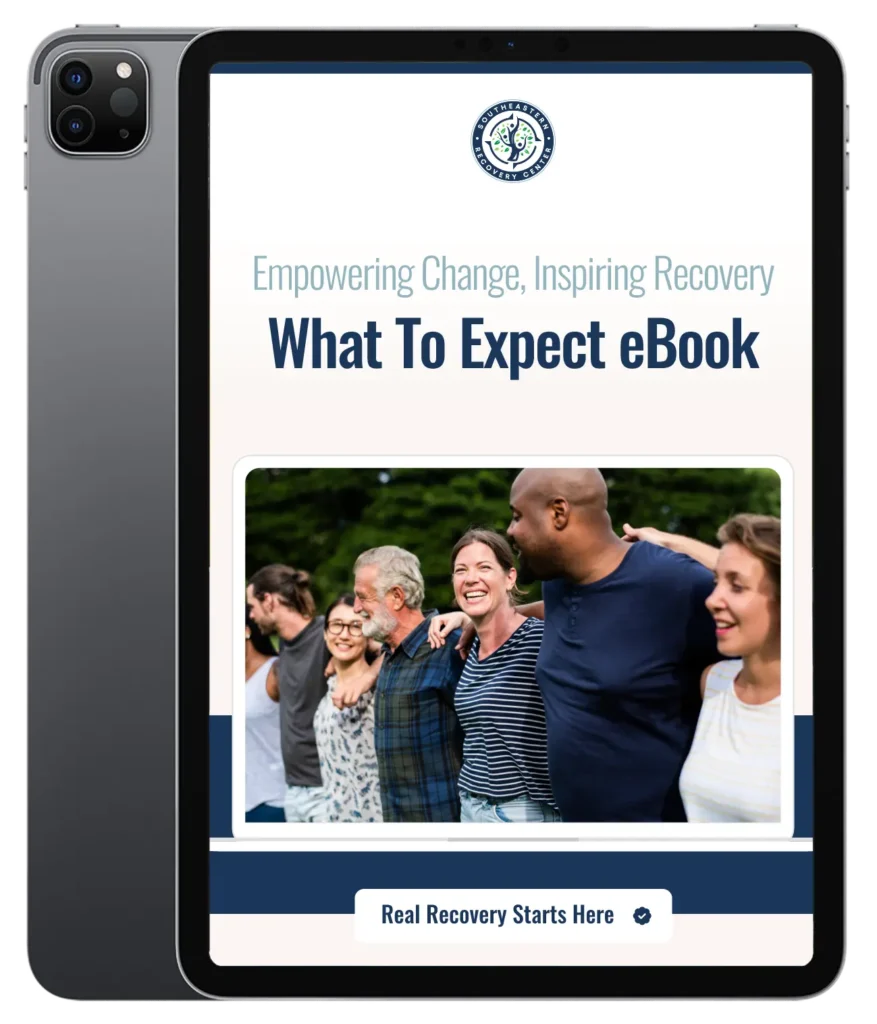
If you or a loved one are interested in learning more about what to expect when getting help for drug or alcohol addiction, please fill out our brief form and download the eBook. You can also give our admissions team a call & we would be happy to answer any questions you may have. Help is only a call away!
![Southeast (2) [Recovered]-07 2](https://serecoverycenter.com/wp-content/uploads/2023/08/Southeast-2-Recovered-07-2.webp "Southeast (2) [Recovered]-07 2")